The modern home and the modern self evolved together.
Before we began shaping environments around our inner lives, we first had to recognize that those inner lives existed. Hungarian-American historian John Lukacs notes that words like self-esteem, self-confidence, melancholy, and sentimental only entered modern language a few centuries ago01. It’s not that the emotions suddenly appeared, but that society began recognizing the individual as possessing a rich interior life.
As people became more aware of their thoughts, emotions, and identities, they also began recognizing that the spaces they inhabited could nurture, influence, and even construct those inner experiences. For perhaps the first time, people weren't merely living; they were becoming conscious of the experience of living.
Once we became aware of ourselves, we became aware of what shaped us.
Before this inward understanding of self, domestic spaces were concerned primarily with function and communal life. But once interior life becomes something worth protecting…
The room matters. Light matters. Privacy matters.
Texture matters. Objects matter.
Atmosphere matters.
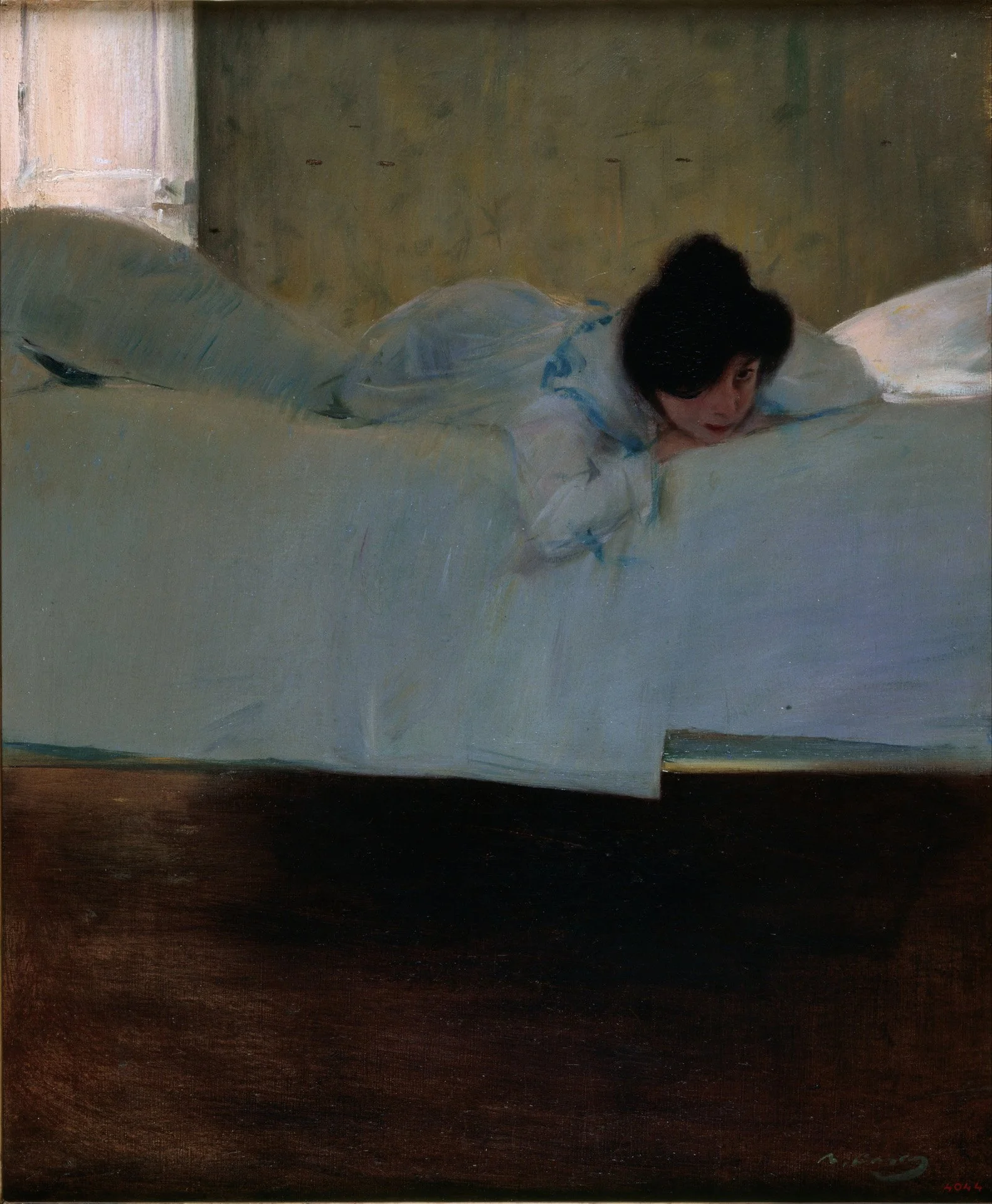
Ramon Casas, Laziness (Idle Hours), c. 1898–1900, oil on canvas, Museu Nacional d’Art de Catalunya, Barcelona.

Zoe Cope, 35mm film photograph, San Rafael, 2022.

Edwin Austin Abbey, Interior Study, c. 1876–77, watercolor on paper, Yale University Art Gallery.
The emergence of the modern self transformed the role of the home. No longer just a refuge from the outside world, it became a place where identity could be cultivated. Private rooms, cherished objects, and spaces for contemplation reflected a growing awareness that our inner lives deserved environments of their own. As Lukacs writes,
"The interior furniture of houses appeared together with the interior furniture of minds".
If environments shape perception and feeling, then interior design is more than the arrangement of objects. It is the shaping of awareness. Atmosphere isn't a decorative layer added once a room is complete, but one of the primary ways an environment communicates with the people who inhabit it. Architect, author, and materials researcher Blaine Brownell suggests that "it is not enough for creative work to be attractive or functional; it must also readjust expectations about reality"02. The most meaningful work does exactly that. It shifts the way we experience the world around us by changing the way we experience ourselves within it. Design becomes less about aesthetics and more about perception, asking not only how a room looks but how it might slow us down, heighten our attention, or create space for reflection.
Today, we devote enormous energy to developing ourselves. We have access to therapy, meditation, exercise, books, podcasts, retreats, and countless practices designed to help us better understand who we are. For much of history, that kind of time, privacy, and emphasis on individual growth simply wasn't available. Yet while we invest deeply in cultivating the self, we often neglect the environments in which that self is continually formed.
We tend to think of identity as something developed through habits, relationships, and reflection; as though it exists independently from place. Yet neuroscience, psychology, architecture, and our own lived experience suggest otherwise. The spaces we return to each day shape our attention, our emotions, and our sense of ease. They become the backdrop to our habits, our relationships, and our rituals. They shape the way we move through the world, and even, our capacity for how to deal with it.
Perhaps intentional interiors aren’t a luxury born of good taste and high budgets. Perhaps they’re the natural consequence of becoming self-aware. As consciousness deepened, so too did our understanding that beauty, material, light, sound, proportion, and atmosphere were never superficial concerns. They were conditions for the self.
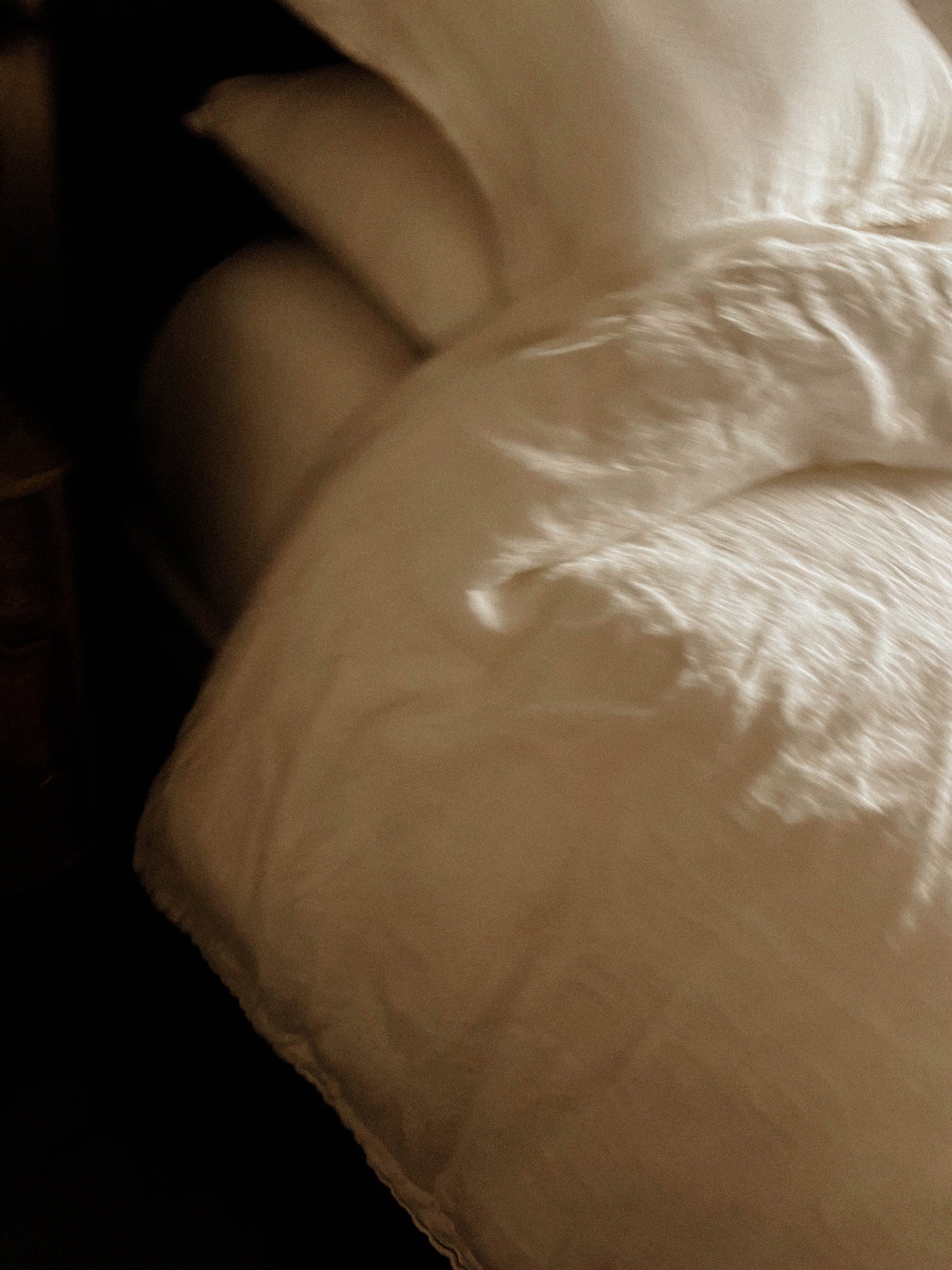
Kelly Price, photograph from Dupe.
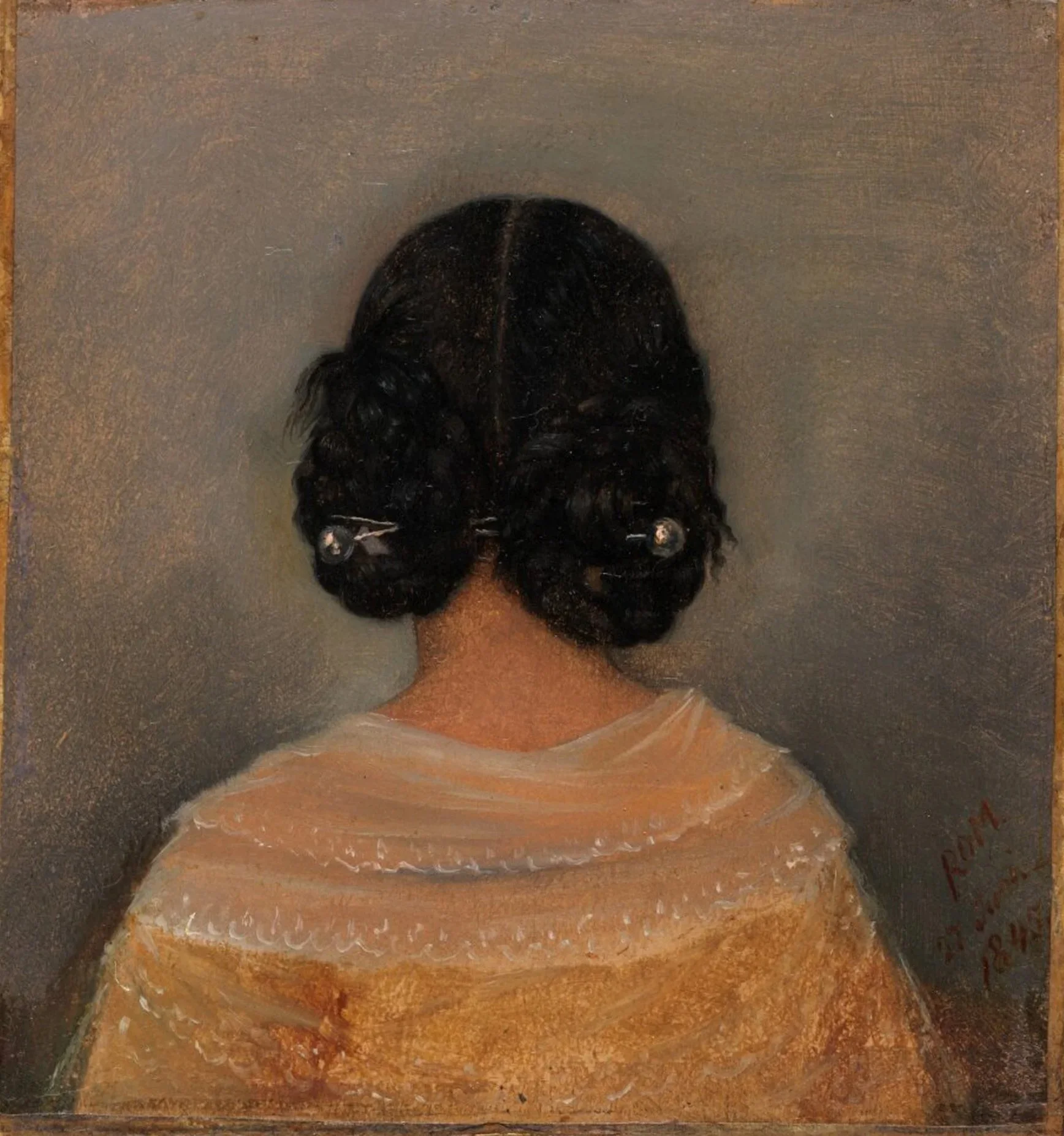
Albert Küchler, Study of a Woman from Behind, 1845, oil on paper mounted on cardboard, Nationalmuseum, Stockholm.
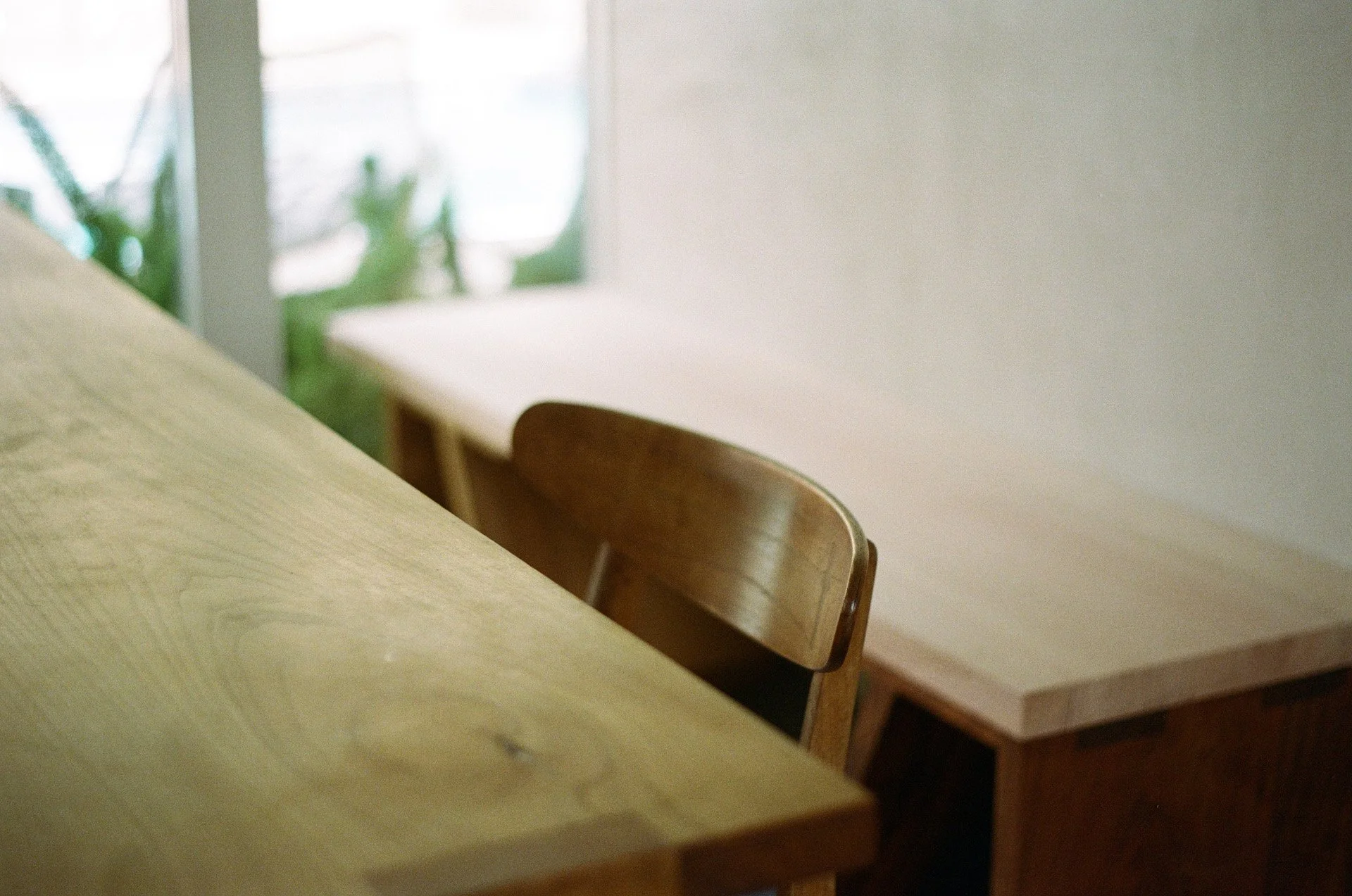
Zoe Cope, 35mm film photograph, San Rafael, 2022.
[01] Rybczynski, Witold. Home: A Short History of an Idea. Penguin Books, 1987.
[02] Brownell, Blaine. Matter in the Floating World: Conversations with Leading Japanese Architects and Designers. Princeton Architectural Press, 2011.
