On the invisible, the sensory, and the spaces between mediums
Some experiences resist documentation. They can't be photographed, recorded, or held in the hand. They can only be translated.
Scent is one of them.
Reading Patrick Süskind's Perfume asks us to imagine smell through language. Tom Tykwer's 2006 film adaptation takes on an even stranger challenge:
how do you convince an audience they can smell something through a screen?
The answer, it turns out, is not by trying to imitate scent, but by recreating the feeling of encountering it.
Tykwer has spoken about his reluctance to make historical dramas. Too often, he felt period films became exhibitions of their own production, where the camera lingered on costumes, architecture, and elaborate sets until the audience felt as though they were walking through a museum instead of inhabiting another century. His ambition for Perfume was the opposite. Every room, every spatter of mud, every thread of fabric, every piece of furniture was painstakingly crafted only to become invisible. "Never be proud of the effort it took," he explained. "Make it feel real by nearly ignoring it."01
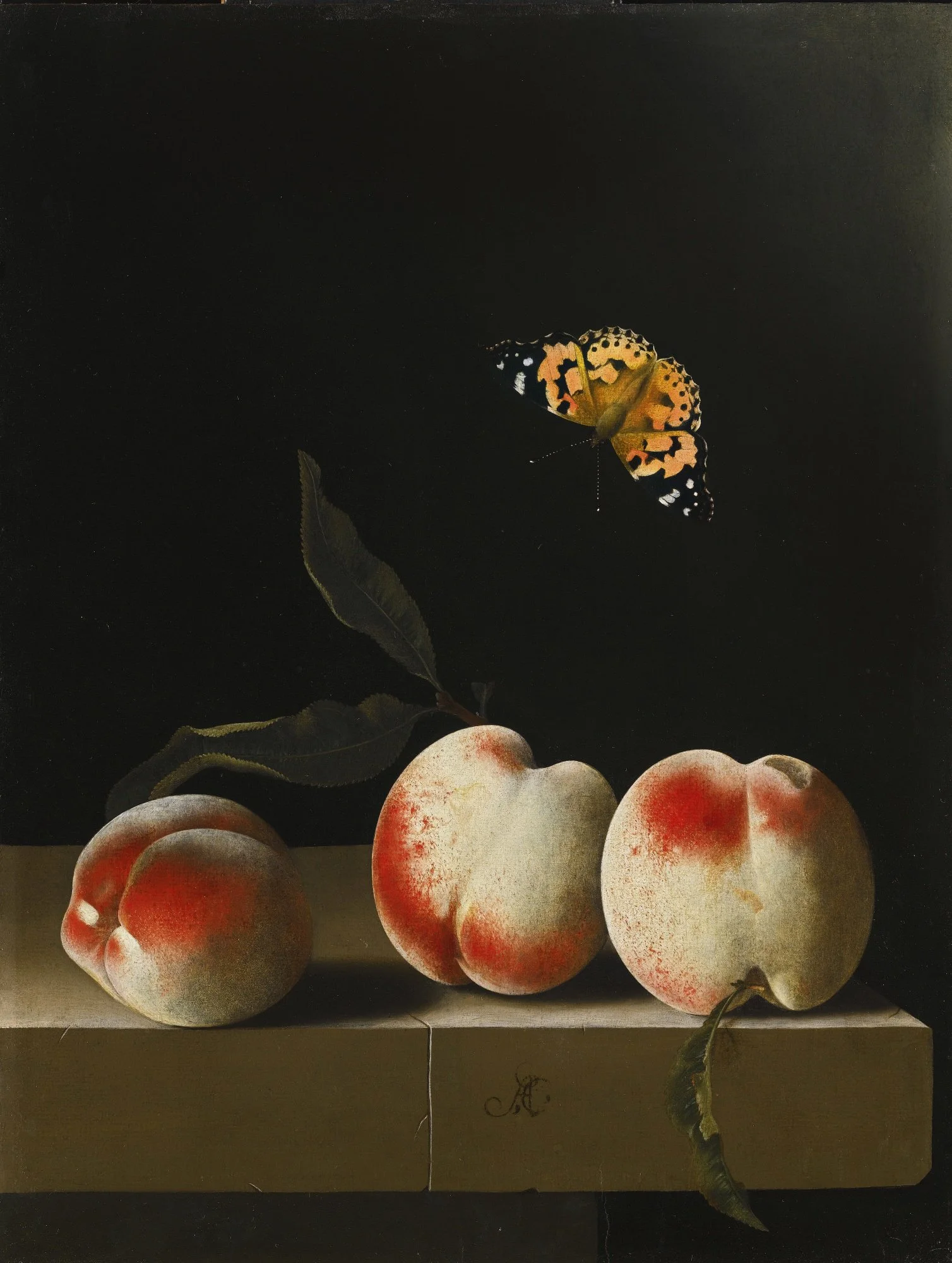
Adriaen Coorte, Three Peaches on a Stone Ledge with a Painted Lady Butterfly, c. 1695.
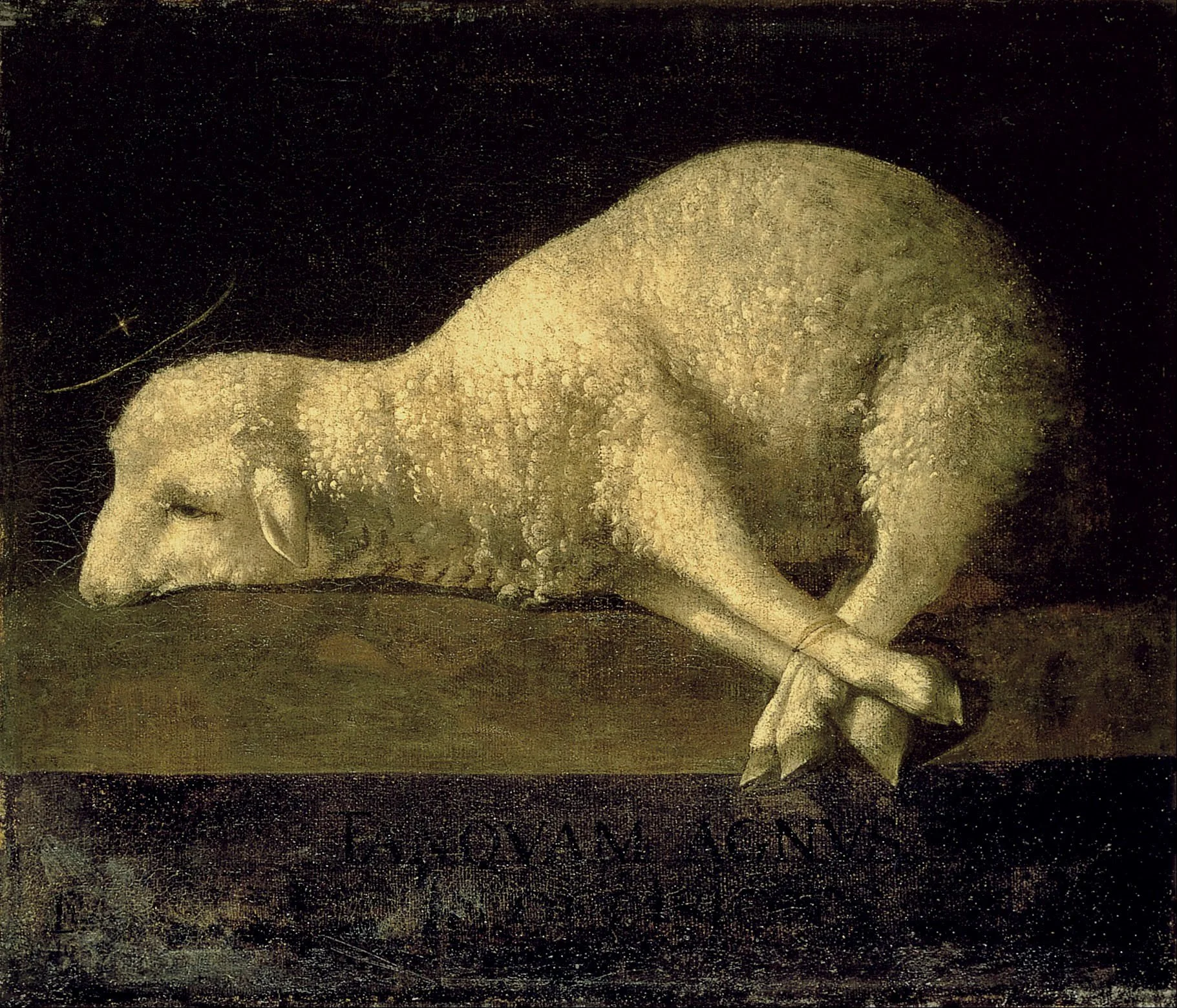
Francisco de Zurbarán, Agnus Dei, 1639, oil on canvas, Real Academia de Bellas Artes de San Fernando, Madrid.
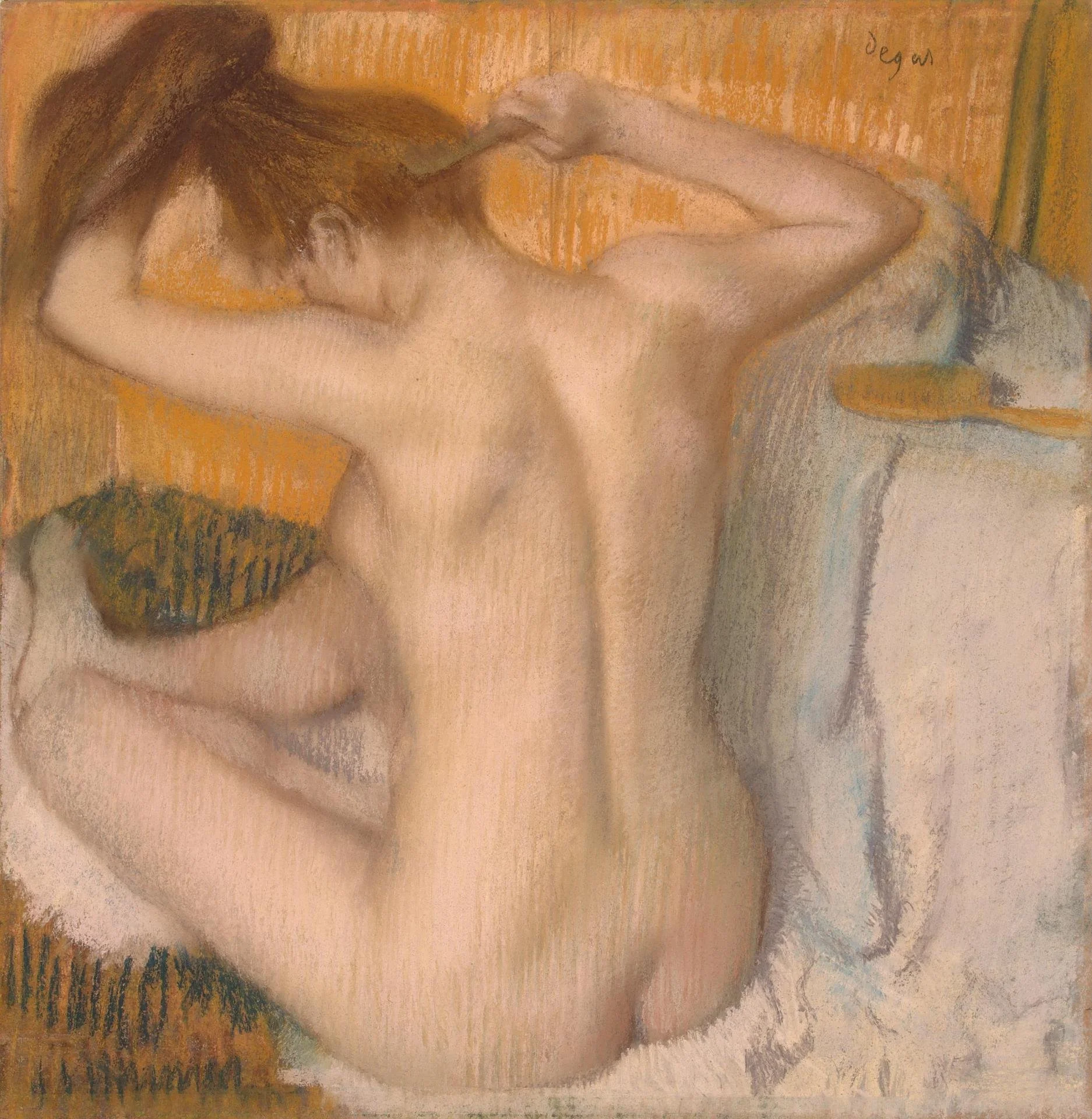
Edgar Degas, Woman Combing Her Hair, c. 1885, pastel on paper mounted on cardboard, State Hermitage Museum, St. Petersburg.
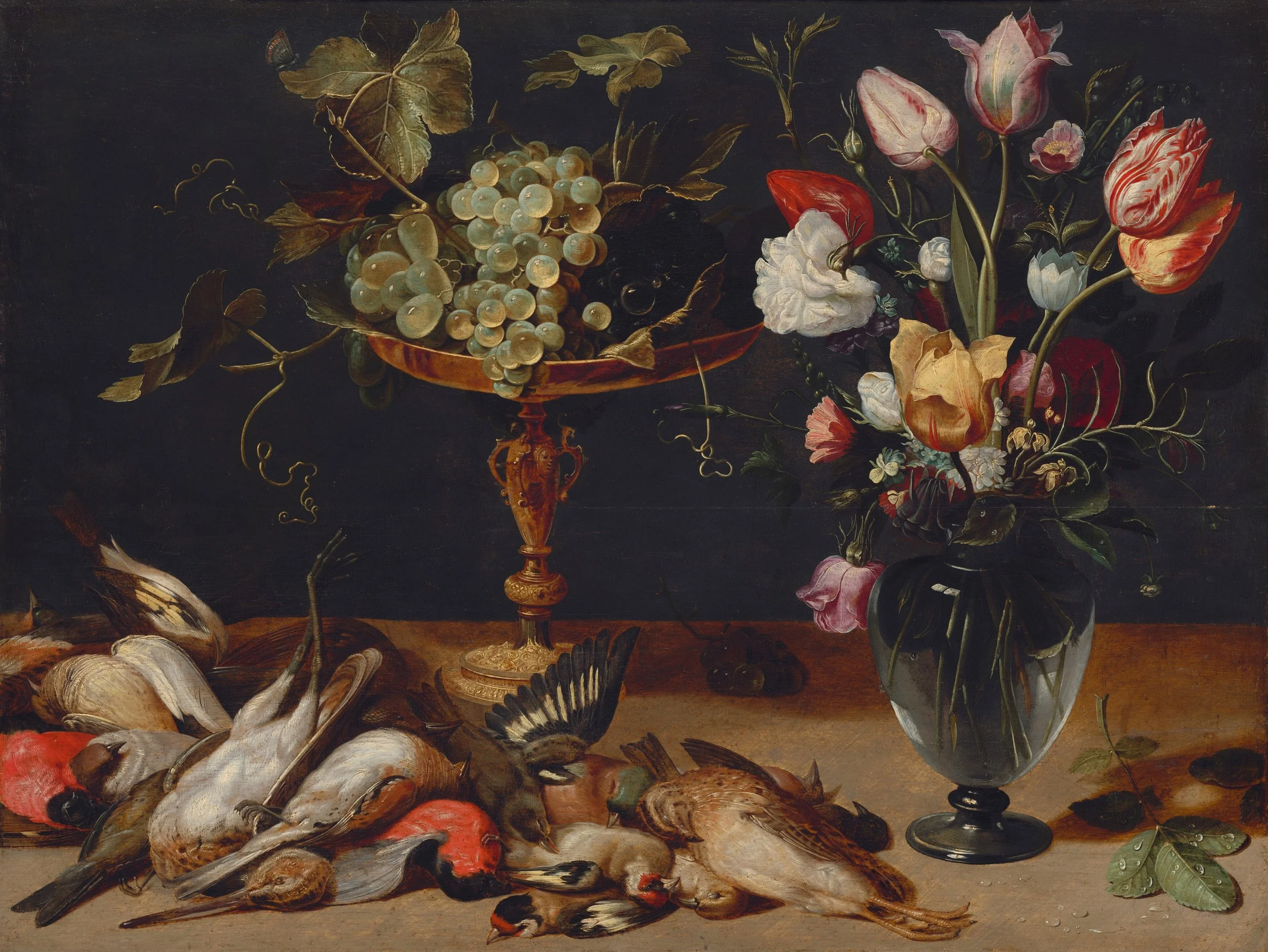
Frans Snyders, Still Life with Flowers, Grapes, and Small Game Birds, c. 1615.
That philosophy feels deeply aligned with what makes any creative work great. Its effect is almost unnoticeable because it feels so authentic, so inevitable.
Cinema has no way of delivering scent. Instead, it borrows from every other language available to it. The camera lingers in impossible proximity. Sound design amplifies dripping water, rubbing against rock, simmering oils, the scrape of leather, the rhythm of breathing. Light catches moisture on fruit and sweat on skin. Beauty and disgust exist side by side until they become inseparable (cue a reading of Paradise Rot by Jenny Hval).
This same challenge appears outside of cinema. Clue Perfumery, an independent fragrance house based in Chicago, understands that you cannot smell a perfume through a website (I would absolutely have added Dandelion Butter to this site if I could had). Rather than attempting to only describe the notes in a list, they build dreamlike worlds through photography, poetic writing, and immersive soundscapes. They're translating scent into image, language, and atmosphere, trusting that together they can evoke something larger than any one medium could accomplish alone.
Even the vocabulary of perfumery suggests this act of translation. Perfumers speak of notes, chords, and compositions, borrowing a language that belongs to music. Individual materials are layered and arranged like a symphony, each contributing to an evolving whole rather than standing alone. Before they become fragrance, however, they begin as prima materia, the raw substances of perfumery. Borrowed from alchemy, the term speaks to the fundamental matter from which transformation begins. Through composition, these seemingly ordinary ingredients are distilled into something entirely new: an invisible atmosphere capable of carrying memory, emotion, and identity.
Translation is never perfect. It isn't supposed to be. Every medium leaves something behind while discovering something new. Somewhere between what is lost and what is found, our imagination completes the composition.
It can’t be the real life act of smelling, but it can be the memory of what smelling feels like.
That relationship between scent and memory becomes the film's emotional center. Tykwer argues that Grenouille's belief, that identity resides in scent, is obsessive but not entirely irrational. We instinctively respond to pheromones and can often recognize a person before consciously looking at them. Entire memories can return through a single unexpected fragrance.02
The film's release inspired another remarkable act of translation. In collaboration with perfumer Pierre Aulas, Thierry Mugler created a collection of fifteen fragrances inspired by Perfume. Rather than bottling beauty, the scents attempted to bottle atmosphere. They carried names like Paris 1738, Fish Market, and Orgy, recreating not idealized perfumes but entire environments from the story. Tykwer described them as "completely confusing" and "quite disturbing." Paris 1738 smelled of rotting elements, sweat, and the dense air of eighteenth-century streets. Orgy was unsettlingly human, filled with the scent of skin, hormones, and bodies. These scents weren't designed to be conventionally pleasant because the deeper design was for them to be a transport. 02 03
Before rewatching Perfume with friends, we’d stopped by OLO Fragrance here in Portland. Olo is a magical store to experience in person where science, vision, and imagination all collide. I left wearing Iron & Opopanax, a fragrance inspired by the scent of sun-warmed cemetery gates in the South. As the opening scene unfolded and Jean-Baptiste Grenouille was carted through the prison in heavy iron cuffs to hear the sentence that would condemn him to death, I remembered the fragrance resting on my wrists. A dark and beautiful coincidence that lead to an unexpectedly connective viewing experience.
To me, that's why fragrance feels unlike any other medium.
It lingers not only in memory, but in the way we remember ourselves.
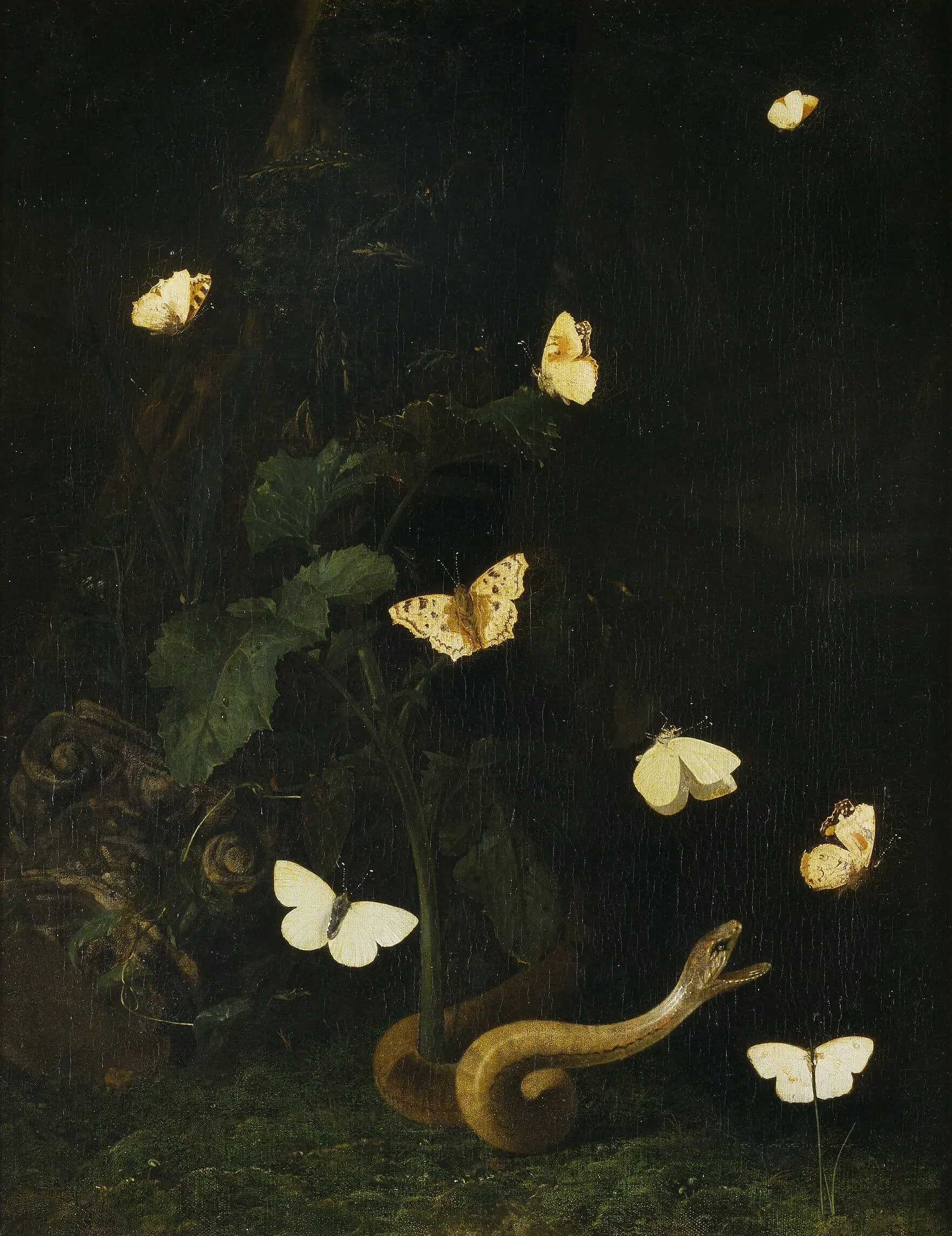
Christiaen Striep, Herbs, Butterflies and a Serpent, date unknown, oil on canvas, Nationalmuseum, Stockholm.
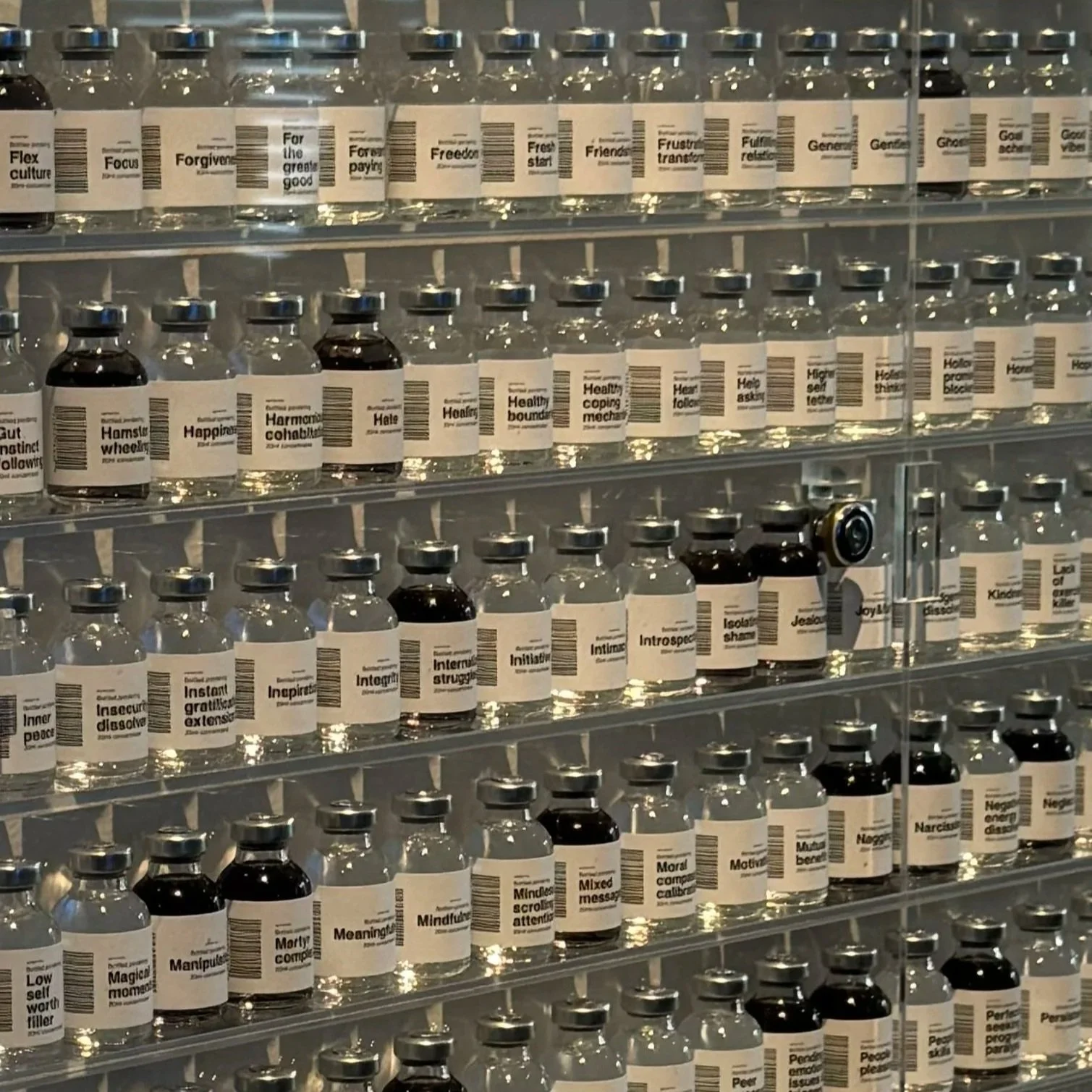
Tim Hasse, photograph from Dupe.
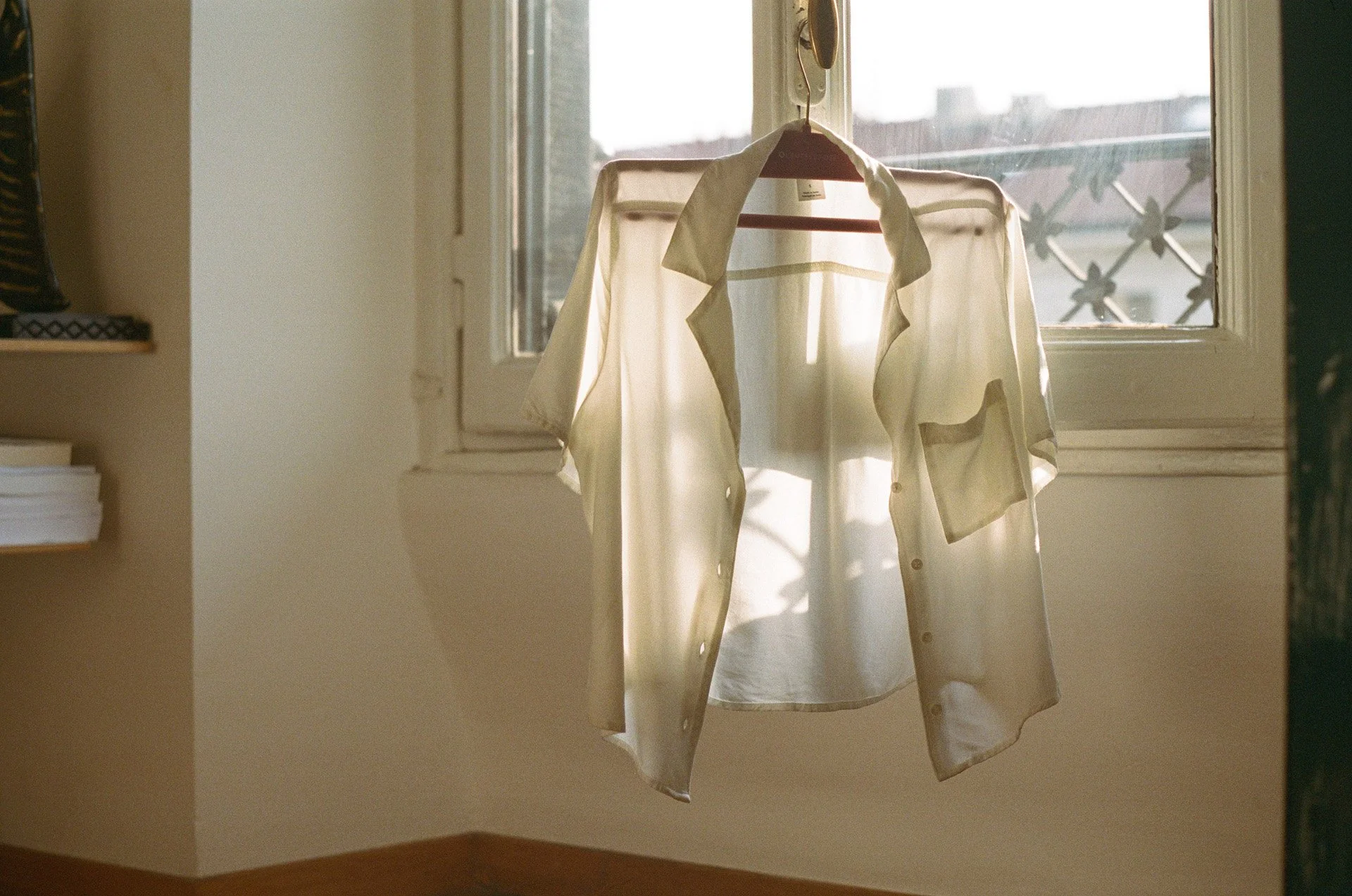
Zoe Cope, 35mm film photography, Milan, Italy, 2023.
[01] Brooks, Brian. "indieWIRE Interview: Tom Tykwer, Director of Perfume: The Story of a Murderer." IndieWire, 2 Jan. 2007
[02] Guillén, Michael. "Perfume: The Story of a Murderer—Interview with Tom Tykwer." ScreenAnarchy, 21 Nov. 2006
[03] Carr, Coeli. “Perfumes Tied to Film Do Not All Smell Well.” NBC News, 20 Nov. 2006
